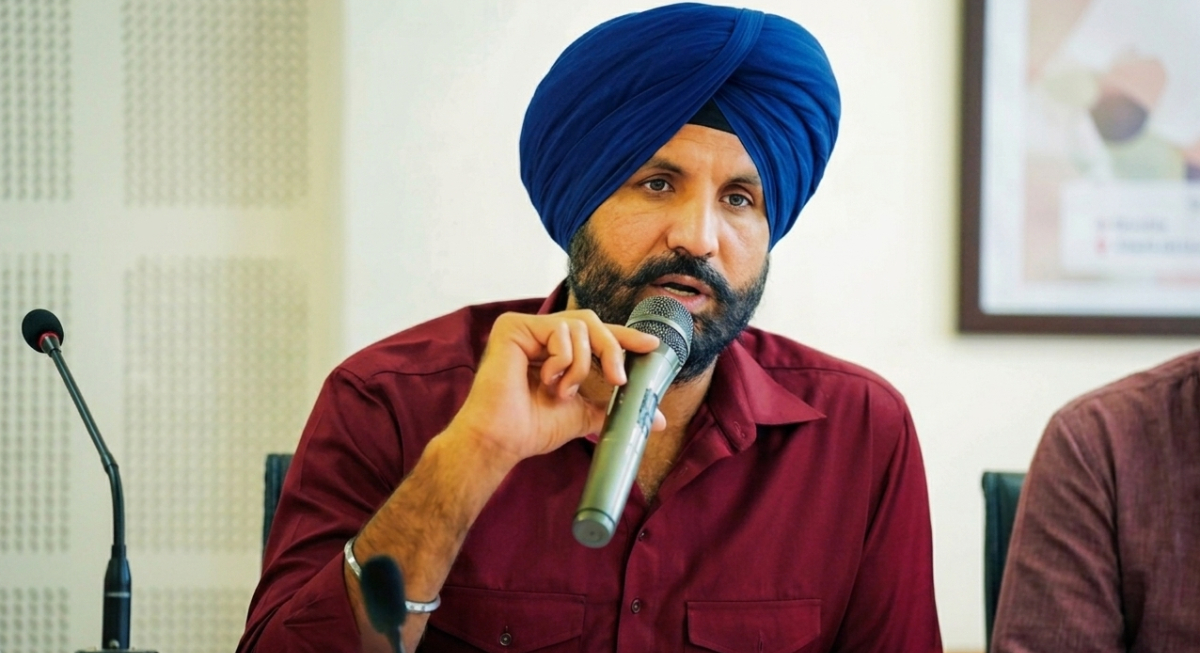
Politics is often shaped by personal experience.
Some leaders grow up around political power, learning politics inside party offices and family circles. Others understand politics through struggle, public life, and years spent among ordinary people. The political journey of Amrinder Singh Raja Warring belongs to the second category.
Today, Raja Warring is widely recognised as one of the most visible political voices in Punjab and serves as the President of the Punjab Pradesh Congress Committee (PPCC). But to understand his political thinking - why he often takes a direct, confrontational approach on public issues - it is important to understand the experiences that shaped him long before leadership positions came into the picture.
His political style did not emerge overnight. It was shaped through personal hardships, years in student politics, organisational work, electoral battles, and close interaction with people at the grassroots level.
Early Life: Learning Responsibility Through Hardship
Every political leader carries personal experiences into public life.
For Raja Warring, one of the earliest and most defining chapters was personal loss. Losing both parents at a young age meant growing up with responsibilities and challenges much earlier than most people experience.
Raised by his maternal family in Muktsar, Raja Warring’s early life and personal journey were shaped by responsibility, struggle, and resilience. He experienced firsthand what uncertainty and struggle can look like. Unlike many politicians who enter public life with institutional support or established political influence, his early years were rooted in ordinary realities.
These experiences appear to have shaped an important aspect of his political thinking: the belief that governance should not feel distant from ordinary citizens.
Whether addressing issues related to farmers, youth employment, transport workers, or local grievances, his politics often reflect a focus on people who feel unheard or overlooked. Supporters often argue that this connection comes from lived experience rather than political strategy.
Student Politics: Where Organisational Thinking Began
Long before becoming a senior political figure in Punjab, Raja Warring spent years in student and youth politics.
His involvement with the National Students’ Union of India (NSUI) and later the Indian Youth Congress played a major role in shaping how he understood politics. These were not years of headline-making speeches or major public positions. Instead, they were years spent organising, campaigning, listening, and competing inside party structures.
Student politics teaches lessons that formal classrooms rarely can.
It teaches how public opinion shifts. It teaches how to build teams. Most importantly, it teaches that political credibility cannot simply be claimed - it must be earned over time.
As Raja Warring moved through organisational responsibilities and eventually became National President of the Youth Congress, his political approach increasingly reflected a grassroots style of leadership. Rather than relying solely on party offices or media narratives, he often preferred public engagement, local outreach, and direct interaction with workers on the ground.
Even today, this background remains visible in how he approaches political communication.
The Gidderbaha Connection
In Punjab politics, electoral loyalty is difficult to sustain.
Public opinion changes quickly, alliances shift, and political waves often reshape constituencies. Yet one of the strongest chapters of Raja Warring’s political journey has been his repeated victories from Gidderbaha.
Winning elections from the constituency over multiple terms strengthened an important political belief: that people value accessibility and consistency.
For many voters, politics is not only about speeches or television debates. It is about whether elected representatives remain available after elections are over.
This is one reason Raja Warring’s political image has often been associated with grassroots engagement. Local meetings, constituency visits, and direct public interactions have remained central to his political style.
His journey in Gidderbaha also reinforced another political lesson - organisation matters. Political success is rarely built by one individual alone. It depends on local workers, volunteers, and people who stay connected to communities at the ground level.
Lessons from Governance: The Transport Ministry Experience
Political thinking changes when leaders move from opposition to governance.
Raja Warring’s tenure as Transport Minister in Punjab added another layer to his political perspective. Holding administrative responsibility often changes how leaders understand public systems.
During this period, transport-related issues, enforcement measures, and public transport concerns became major talking points. Raja Warring publicly emphasised stronger accountability, enforcement, and protection of public systems.
For him, governance was not only about policy announcements; it was also about implementation.
This period appears to have reinforced a stronger belief in administrative accountability - the idea that institutions should work for public benefit and that government systems must remain answerable to citizens.
Supporters viewed this phase as proof of decisive leadership, while critics debated aspects of the approach - something that naturally comes with public office. But it undeniably became an important chapter in shaping his political identity.
Why His Politics Often Feels Direct
One question often asked in Punjab politics is: why does Raja Warring take such a direct approach on political issues?
Part of the answer is in his background.
Leaders shaped through organisational politics and electoral battles often develop a style built around visibility, direct engagement, and public accountability. Years of student politics, constituency work, and political struggles naturally influence how leaders communicate.
Rather than staying limited to formal statements, Raja Warring has often chosen a more outspoken political style, particularly when raising concerns around governance, state issues, or opposition politics.
Supporters see this as assertive leadership. Critics may interpret it differently. But either way, it has become a defining feature of his political identity.
More Than Positions, A Political Journey
Political careers are often remembered through titles - MLA, minister, party president, Member of Parliament. But behind every title is a longer story.
In Raja Warring’s case, that story includes personal hardship, years of organisational politics, electoral struggles, and public service.
Whether one agrees with his politics or not, it is difficult to separate his political thinking from the experiences that shaped him. From growing up in difficult circumstances to building a career through grassroots politics, these experiences continue to influence how he approaches leadership in Punjab today.
As Punjab politics continues to evolve, leaders are increasingly judged not only by speeches but by consistency, accessibility, and connection with ordinary people. Raja Warring’s journey reflects an attempt to build politics around those ideas - shaped not in privilege, but through experience.