Punjab has over 232,000 opioid-dependent individuals per AIIMS data, with approximately 40 drug overdose deaths reported monthly - over 1,000 yearly. NDPS cases are up 40%, heroin recoveries up 148%, and meth seizures up 447% under AAP's watch. The AAP government promised to make Punjab drug-free in four months of taking office in March 2022 - that deadline has been extended multiple times, most recently to August 2025. Raja Warring has publicly demanded accountability, challenged every missed deadline, and has acknowledged that previous Congress governments also failed to take adequate action against drug lords.
Punjab's drug crisis is not new. What is new in 2026 is the weight of accumulated evidence - of deaths, of missed deadlines, of promises made and broken across multiple governments - that makes the question of political accountability impossible to avoid.
Approximately 40 drug overdose deaths are reported every month in Punjab, with many going unreported. That is the figure Amarinder Singh Raja Warring, Member of Parliament from Ludhiana and Punjab Congress President, stated publicly while addressing a 'Naukari Devo Nasha Nahi' rally organised by the Punjab Youth Congress in Patiala. Extrapolated, it means over 1,000 young Punjabis dying of drug overdose every year - a figure Warring described at the same rally as an "alarming situation" that the Bhagwant Mann-led AAP government had failed to control.
The AAP government, for its part, contends that enforcement has intensified - citing rising NDPS case registrations and drug seizures as evidence of action. The debate between enforcement statistics and ground-level mortality data lies at the heart of Punjab's drug crisis accountability question in 2026.
The Scale of Punjab's Drug Problem - Verified Statistics
The drug crisis in Punjab did not begin with the AAP government. Its roots run three decades deep - through the Golden Crescent narcotics transit route, the post-Operation Blue Star social disruption, the collapse of agricultural incomes, and the systematic neglect of rural youth employment.
But the scale in 2026 is staggering by any measure:
Opioid dependence: The AIIMS Punjab Opioid Dependence Survey estimated over 232,000 individuals in Punjab are opioid-dependent. The majority of users are young males, often unemployed and economically marginalised, with heroin as the primary drug of choice.
Injecting drug users: Among those dependent on opioids, approximately 28 per cent are Injecting Drug Users (IDUs) - a category that carries multiplied risks of HIV transmission, hepatitis C, and other blood-borne infections.
NDPS cases: Punjab crime 2026 data shows NDPS cases registered under the state's anti-drug enforcement have increased by 40 per cent between 2022 and 2026 compared to the previous period. The government cites this as evidence of action. Opposition leaders, including Warring, argue it reflects the scale of the problem rather than its resolution.
Drug seizures: Heroin recovery in Punjab spiked by 148 per cent over the 2022–2026 period compared to the previous five years. Crystal methamphetamine seizures increased by 447 per cent. These figures indicate both enhanced enforcement capability and a dramatic expansion of the drug supply chain reaching Punjab.
Overdose deaths: Tribune India's reporting documented 14 drug overdose deaths in 14 days in one period - a rate that prompted demands for the Chief Minister's resignation from multiple opposition parties. In April 2026, Congress MP Sukhjinder Singh Randhawa pointed to four drug deaths within 48 hours in a single week, describing them as "not isolated cases" but evidence of the ground reality behind the AAP government's war on drugs campaign.
The AAP Government's Anti-Drug Record - Promises vs Delivery
The AAP government's drug-related commitments when it came to power in March 2022 were unambiguous. In its election campaign, AAP convener Arvind Kejriwal promised to make Punjab drug-free within four months of assuming office. That deadline was May 2022.
What followed was a sequence of progressively extended deadlines that became a political liability for the government:
- May 2022 - original four-month deadline passed with no drug-free declaration
- End of 2024 - a state minister extended the deadline by two years
- August 15, 2025 - CM Bhagwant Mann's latest stated deadline, as reported by Tribune India
- May 31, 2025 - Raja Warring publicly questioned on social media: "Today is May 31, 2025, the DEADLINE you set for defeating drugs in Punjab. Will you please tell us about the status of the 'War on Drugs'?"
The AAP government's Operation Nishchay - its flagship anti-drug campaign - registered over 70,000 addicts at de-addiction centres, a figure the government cited as evidence of outreach. Critics noted that de-addiction centre capacity was overwhelmed and that the patient crowd far outnumbered in-patient capacity at many centres across Punjab.
The government has consistently maintained that the backbone of the drug smuggling mafia has been broken through enforcement action. Warring challenged this directly in June 2024, saying: "Every time a chief minister comes and presents data that he has taken action against so many persons. How will you end drugs and how will you wean people from drugs? The problem of drugs has increased four times in Punjab."
The Structural Causes - What Enforcement Alone Cannot Fix
The Punjab drug crisis statistics consistently point to the same structural conditions that enforcement operations cannot address alone.
Unemployment: The majority of opioid-dependent individuals in Punjab are young, unemployed males from economically marginalised backgrounds. Agricultural decline, the collapse of rural incomes in the post-Green Revolution cycle, and the absence of industrial employment alternatives in rural areas have created a reservoir of vulnerable young people for whom drugs represent both a coping mechanism and - for some - a livelihood.
Border geography: Punjab's porous border with Pakistan places it directly in the path of the Golden Crescent's heroin and synthetic opioid supply chains. Cross-border drone drops - documented in multiple Punjab Police press releases between 2023 and 2026 - have introduced weapons and narcotics simultaneously, creating a convergence between the drug problem and the gangster problem that makes both harder to solve.
Rehabilitation infrastructure: With over 232,000 opioid-dependent individuals and de-addiction centres operating beyond capacity, Punjab's rehabilitation system is structurally unable to meet the demand it faces. The 2026 drug and socio-economic census launched by the state government - a commendable step - came in the final year of its term rather than at the beginning, limiting its policy impact within this legislative cycle.
Cultural factors: Research consistently points to the role of peer pressure, cultural normalisation of substance use among certain demographics, and the weakening of traditional community support structures in driving drug uptake among Punjab's youth. Enforcement addresses supply; cultural and community-level interventions are needed to address demand.
Raja Warring's Documented Position and Accountability Demands
Warring has consistently raised the Punjab drug menace 2026 as a governance accountability issue - not merely a social problem - placing responsibility squarely on whichever government is in office. His documented positions on the issue include:
- Publicly stating that over 1,000 Punjab youth die of drug overdose every year - an "alarming situation" that the AAP government had failed to control
- Demanding that Chief Minister Bhagwant Mann hold a detailed all-party discussion on the drug crisis in the Punjab Assembly
- Challenging the government's deadline framework on social media on 31 May 2025 - the date of the government's own stated "war on drugs" deadline
- Stating that the drug problem had "increased four times in Punjab" under AAP's watch
His position also includes an acknowledgment that previous Congress governments, including that of former CM Capt Amarinder Singh, failed to take adequate action against drug lords - a statement he made publicly at the Patiala rally, saying he "felt sorry" that Singh had "failed the Congress in taking action against drug lords."
For more on Warring's broader law and order advocacy, read hismajor campaigns, hispolitical background, and hisfull biography. Visit thearticles section for more.
Join the Movement
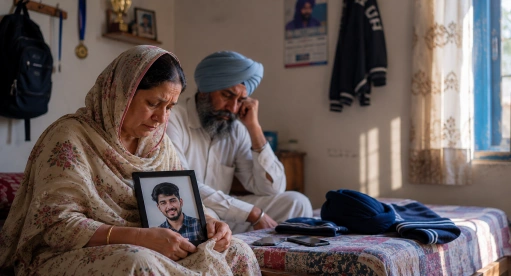
Every death from drug overdose in Punjab is a family destroyed - a mother, a father, a sister who will never be the same. Over 1,000 families every year. Punjab's youth deserve a government that takes this seriously - not with deadlines that get extended, not with enforcement statistics that obscure the human toll, but with a comprehensive, honest, sustained commitment to ending this crisis.
Raja Warring has held every government - including Congress governments - accountable on this issue. Because accountability is not partisan. It is necessary.