For people living in Punjab, national security is closely connected to everyday life. The state shares an international border with Pakistan, and developments along that border affect its people directly. Questions about security, military preparedness and the safety of soldiers therefore matter deeply to Punjab.
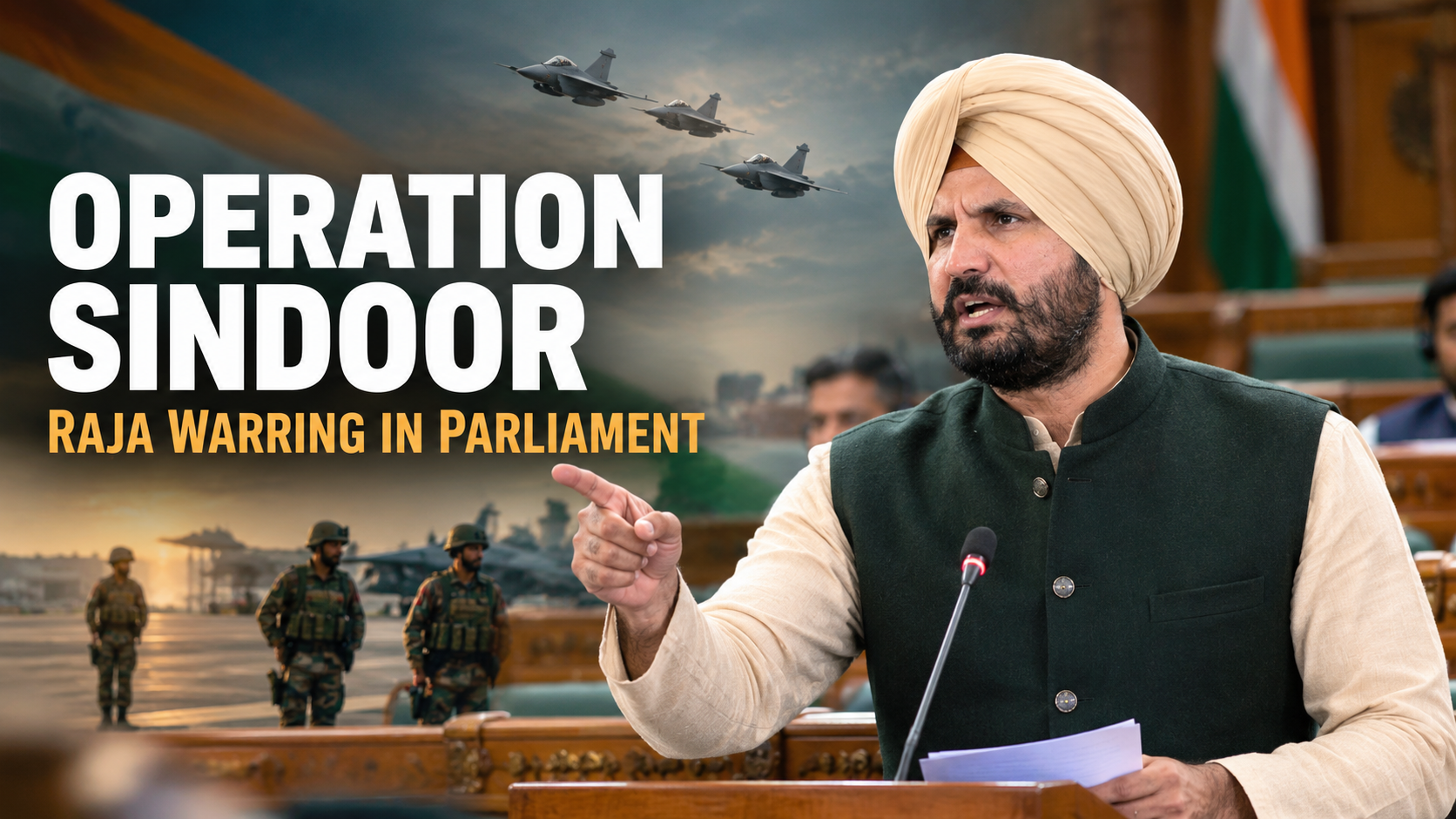
On July 28, 2025, Ludhiana MP Amarinder Singh Raja Warring raised these issues during the Lok Sabha’s special discussion on Operation Sindoor. He paid tribute to the soldiers guarding the country before turning to the questions he wanted the government to answer.
His intervention covered the Pahalgam terror attack, intelligence failures, reported aircraft losses, the situation near Bathinda and the government's communication during the operation.
Who takes responsibility for the Pahalgam attack?
Warring began by questioning how the Pahalgam attack had taken place despite the security arrangements in Jammu and Kashmir. The attack on April 22, 2025, killed 26 people.
He also referred to the visit of Union Home Minister Amit Shah to Jammu and Kashmir on April 8, just two weeks before the attack. Warring asked whether intelligence agencies had received any warning and, if so, whether the government had acted on it.
He connected the attack with earlier security incidents, including Pulwama, and asked why such breaches continued to happen. His central question was about responsibility: who would answer for the loss of innocent lives?
Warring argued that accountability had to reach the political leadership. He said that, if he were in the Home Minister’s position, he would apologise to the country and resign. He described the incident as an intelligence failure and questioned the government's record after more than 11 years in power.
This intervention added to his record of raising questions and participating in debates in the 18th Lok Sabha.
What questions did Warring raise about aircraft losses?
Warring also turned to the military developments during Operation Sindoor. While the Defence Minister had spoken about the destruction of terrorist infrastructure and the elimination of more than 100 terrorists, Warring asked the government to address reports of Indian aircraft losses.
During his speech, he referred to the figure of five aircraft and questioned the operational restrictions placed on the Armed Forces. He argued that the forces should have the freedom and resources needed to respond effectively when facing an adversary.
His point was not to question the soldiers carrying out the operation. It was to ask the political leadership to explain the decisions surrounding the operation and the information available to the public.
Why did Warring bring the Bathinda aircraft crash to Parliament?
Warring then brought a Punjab-specific issue into the national discussion. He spoke about an aircraft crash near Bhisiana Air Force Station in the Bathinda area and referred to his visit to the site.
He told Parliament that he had photographs from the location and identified the wreckage as that of a Rafale aircraft. He also referred to the markings PS001 and BS001 visible in the material he presented.
Warring questioned why the aircraft had initially been described as an unidentified aircraft. He also asked why the technical details behind the incident had not been made public.
By raising the matter in Parliament, he brought attention to an incident in Punjab and sought a clear explanation from the government.
What did Warring ask about communication with Pakistan?
Another issue raised by Warring concerned the communication surrounding the military operation. He questioned why Pakistan had been informed about the limits or nature of the strikes and what that meant for the element of surprise.
The question formed part of his wider argument about how the operation was planned and communicated. He wanted the government to explain the decisions taken during a sensitive military situation.
External Affairs Minister S. Jaishankar outlined India's diplomatic position in Parliament. He said India had informed other countries that the strikes targeted terrorist infrastructure in Pakistan and Pakistan-occupied Jammu and Kashmir. He described the action as focused, measured and non-escalatory.
That explanation covered India's international messaging. Warring's specific question about communication with Pakistan remained a separate issue in the debate.
Why did Warring say Operation Sindoor should stay above party politics?
Warring's position on the political debate around Operation Sindoor had also been clear before the parliamentary discussion.
On June 5, 2025, he issued a separate statement criticising both the BJP and the Aam Aadmi Party for politicising the operation. He objected to political claims of credit for the Armed Forces' actions and also criticised remarks that questioned the operation's success.
It was in that statement that he said, “Operation Sindoor is not Operation Lotus.”
He also made a distinction between questioning the government's political decisions and questioning the Armed Forces. His position was that political parties could debate the government's actions, but the capability and sacrifice of soldiers should not become a subject of partisan attacks.
This statement was made in June, not during his July 28 Lok Sabha speech. Together, the two interventions show the issues he raised publicly: accountability from the government and respect for the Armed Forces.
What did the government say in Parliament?
During the July 28 discussion, Defence Minister Rajnath Singh said that Operation Sindoor had targeted nine terrorist infrastructure sites in Pakistan and Pakistan-occupied Jammu and Kashmir. He stated that more than 100 terrorists, trainers, handlers and associates had been killed.
Singh also said the operation was planned to target terrorist infrastructure and avoid harm to civilians. He maintained that India had achieved its political and military objectives.
Jaishankar addressed the diplomatic side of the operation, explaining how India communicated its position to other countries during the hostilities.
These statements formed the government's account of the operation. Warring's intervention focused on the questions he believed still required answers, particularly around the Pahalgam attack, intelligence responsibility and the information shared with the public.
Watch the full video of Raja Warring’s address during the special discussion on Operation Sindoor on July 28, 2025, as recorded by Sansad TV.
Watch the full speech on Sansad TV →
For more details about his interventions and questions in Parliament, read theRaja Warring in Parliament: 82 Questions and 18 Debates.
Join the Movement
Every question about national security is ultimately a question about the safety of ordinary people. When Raja Warring raises the intelligence failures behind Pulwama and Pahalgam, he is asking who will take responsibility for the lives lost. When he questions the aircraft losses during Operation Sindoor, he is asking whether the country is being given the full picture. And when he brings up the crash near Bhisiana, he is asking why people deserve answers about what happened.
That is what parliamentary accountability is about: asking difficult questions, seeking transparency, and ensuring that national security is matched by responsibility. If you believe citizens deserve clear answers from those in power, stay informed, raise your voice, and take part in the conversation.