The Guru Granth Sahib is the central holy scripture of Sikhism, treated by Sikhs not just as a book but as a living Guru - it is given the same reverence a person would receive. Any act of disrespect toward it - theft, tearing its pages, defacing it, or using it in a derogatory way — is considered "sacrilege" (in Punjabi, beadbi), and it is one of the most sensitive and emotionally charged issues in Punjab, a state where Sikhs form the majority of the population.
In 2015, a series of such incidents took place in Punjab's Faridkot district. They triggered protests, a police firing that killed two people, and a political controversy that - a decade later - is still unresolved. This article explains what happened, who is involved, and why a sitting Member of Parliament, Amarinder Singh Raja Warring, recently raised the matter in India's national Parliament, demanding justice.
What Actually Happened in the 2015 Sacrilege Incidents?
The controversy is made up of three separate but connected incidents, all in villages in Faridkot district, Punjab:
- June 1, 2015: A saroop (a physical, bound copy) of the Guru Granth Sahib was stolen from a gurdwara (Sikh place of worship) in Burj Jawahar Singh Wala village.
- September 24–25, 2015: Handwritten posters containing derogatory, insulting language about the Sikh religion and its Gurus were put up in public places in Bargari and Burj Jawahar Singh Wala.
- October 12, 2015: Torn pages, believed to be from the stolen scripture, were found scattered near the Bargari gurdwara.
For a community that treats the Guru Granth Sahib as a living spiritual authority, these were not minor acts of vandalism - they were experienced as a direct assault on faith itself. News of the incidents spread quickly and led to large public protests across the region.
The Behbal Kalan and Kotkapura Police Firing
As protests grew, police opened fire on demonstrators in two places - Kotkapura and Behbal Kalan - in October 2015. Two protesters were killed in Behbal Kalan, and others were injured. This firing became, in many ways, as central to the controversy as the original sacrilege incidents themselves: it added the question of state accountability - why did police fire on people protesting a religious offense? — on top of the original demand to catch those responsible for the desecration.
Who Are the Accused in the Guru Granth Sahib Sacrilege Case?
Investigating who was actually behind the sacrilege took years and passed through multiple agencies.
The CBI Investigation (2015–2019)
The case was first handed to India's federal investigating agency, the CBI, in November 2015 by the state government at the time (led by the Shiromani Akali Dal, SAD). The CBI made little progress and eventually filed a closure report in July 2019 without identifying culprits — a decision even the SAD publicly rejected.
A new state government (Congress) came to power in 2017. In 2018, the Punjab Assembly voted to take the case back from the CBI and hand it to a state Special Investigation Team (SIT).
The Punjab SIT and the Dera Sacha Sauda Link
The SIT's investigation eventually pointed to the Dera Sacha Sauda, a religious sect based in Sirsa, Haryana, as being behind the sacrilege. It named the sect's chief, Gurmeet Ram Rahim Singh (already in jail on unrelated rape convictions), as the main conspirator, along with several of his followers, including three national committee members of the sect who had gone into hiding and were declared "proclaimed offenders" by courts.
What Happened to the Accused
One of the accused, Mohinder Pal Bittu — who had reportedly confessed to planning the theft — was killed by fellow inmates inside Nabha jail in 2019, before he could be tried.
One of the absconding accused, Sandeep Bareta, was reported arrested in 2023, but this turned out to be a case of mistaken identity; Bareta remained at large.
Current Status of the Sacrilege Trial
Prosecuting Ram Rahim required formal government permission under Indian law, which the Punjab government eventually granted. His trial, along with that of the other accused, has moved between courts (it was shifted from Faridkot to Chandigarh for security reasons) and was paused by a court stay in 2024 before resuming later that year on the Supreme Court's orders.
As of now — more than a decade after the incidents - the trial is still ongoing. No one has yet been convicted.
Why This Has Stayed a Political Issue
Eleven years of promises. Three governments. Still no justice. That is the story of Punjab's sacrilege case in one line. The Congress government that took office in 2017 didn't wait for public pressure — it commissioned the Justice Ranjit Singh inquiry and built the SIT that finally named the Dera Sacha Sauda leadership as the real conspirators. But when AAP swept to power in 2022 on the back of a promise that the guilty "would not be spared," the trail went cold — the SIT report landed, and it stayed silent on exactly the leadership AAP had vowed to expose. Raja Warring called it out then, and he hasn't stopped since.
Now, as Punjab Congress president and MP from Ludhiana, he has carried that same fight onto the floor of India's Parliament — demanding an end to political excuses, and real punishment for those responsible.
What Raja Warring Did in Parliament About the Sacrilege Case?
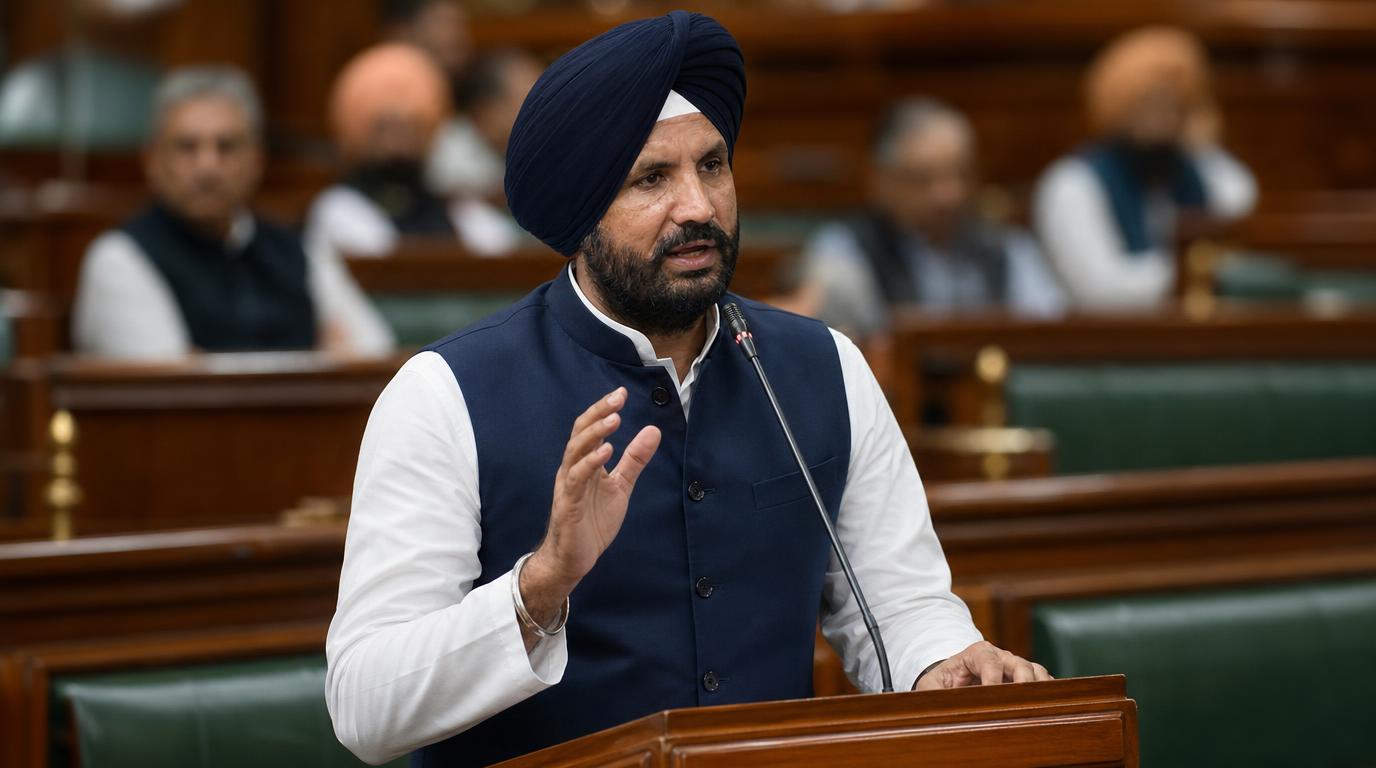
Speaking in the Lok Sabha (the lower house of India's Parliament), Warring raised the sacrilege issue and named Sukhbir Singh Badal — president of the Akali Dal, and Punjab's Deputy Chief Minister and Home Minister back in 2015 when the incidents occurred — suggesting Badal, as the state's top executive authority at the time alongside then-CM Parkash Singh Badal, bore responsibility that had never been properly investigated or prosecuted. Warring alleged that his microphone was switched off in the House at the exact moment he named Badal — which he pointed to as evidence that powerful people have repeatedly managed to avoid scrutiny on this issue.
He also referenced the two protesters killed in the Behbal Kalan firing, framing the sacrilege issue as being about both a religious insult and a loss of human life that has never been properly answered for.
This wasn't a one-off statement. Raja Warring has raised the issue publicly and repeatedly over the years — including criticizing the current AAP government in 2022 for what he called an attempt to "hush up" the case after its own SIT report stayed silent on the Akali leadership's alleged role, something AAP itself had promised to investigate before winning the 2022 election.
A New Law, But Raja Warring Says It's Not Enough
In April 2026, the Punjab Assembly passed a new law — the Jaagat Jot Sri Guru Granth Sahib Satkar (Amendment) Act, 2026 — that increases the maximum punishment for sacrilege against the Guru Granth Sahib to life imprisonment, with fines of up to ₹25 lakh.
Raja Warring welcomed the stronger punishment on paper but said it wasn't enough on its own. His challenge to the state government was direct: if you're serious about justice, why not commit to an actual deadline for prosecuting the people already accused in the 2015 cases? He pointed out that this same government had promised swift justice before the 2022 election — a promise that, in his view, still hasn't been kept, tougher law or not.
Why It Matters
For a reader encountering this for the first time, the core of the story is this: in 2015, a series of acts against Sikhism's holiest text triggered protests and a fatal police response in Punjab. A decade later, despite multiple investigations, a change in the accused sect's fortunes, and a new tougher law, no one has been convicted. Raja Warring's decision to raise this in Parliament — and to name a specific senior politician in doing so — is his way of pushing a state-level grievance onto the national stage, and insisting that time passing should not mean the demand for justice fades with it.
To see how this fits into his broader record in Parliament, read Raja Warring in Parliament — 82 Questions and 18 Debates in the 18th Lok Sabha. For more on his life, work, and the issues facing Punjab, browse the articles section.
Join the Movement
Punjab's future depends on citizens who refuse to let accountability fade with time — who keep asking questions long after the headlines move on. Whether your concern is the sacrilege cases, justice for victims' families, or holding leaders accountable regardless of party, your voice matters.
Join a growing community of Punjabis working toward a Punjab where justice isn't indefinitely delayed, and no one — however powerful — is beyond scrutiny.